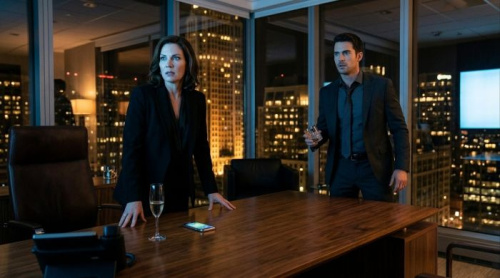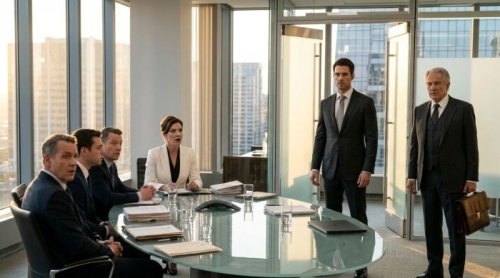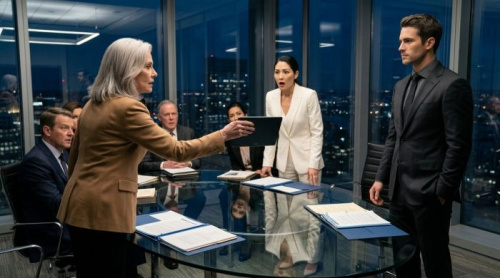

I wrapped both hands around the warm ceramic mug, letting the steam rise between us before I answered Margaret.
"She claimed Arthur signed full temporary proxy over to her before Tuesday's surgery," I said, keeping my voice low enough that the lone waitress behind the chrome counter couldn't hear. "She fired me in front of two Milwaukee managers and a LaSalle Street partner, tried to force a non-disparagement signature in exchange for two weeks' pay, and handed the Midwest Dispatch Desk to Grant Mercer."
Richard Thorne didn't blink. He unbuckled his leather briefcase with slow, practiced precision and laid three thick, blue-bound folders onto the Formica table.
"Grant Mercer," Richard repeated, adjusting his wire-rimmed glasses as he opened the top dossier. "Thirty-four years old. Two civil judgments in Cook County for unpaid vendor invoices, one Chapter 7 bankruptcy in 2022, and zero commercial freight credentials. And yet, over the past ninety days, Victoria authorized four separate 'consulting retainers' totaling one point eight-five million dollars—paid directly to Holloway Freight Partners LLC."
My stomach dropped. "Carlos just called me from the Joliet yard. Grant pushed another two-hundred-thousand-dollar batch onto Monday's manifest tonight—and coded the approval stamp to my employee ID at 7:45 PM."
Margaret's eyes narrowed into two sharp slits. "Two point zero-five million total. Right when Arthur went under anesthesia."
"They think they're untouchable," I said, leaning forward over the table. "They think because Arthur is in recovery at Northwestern Memorial, nobody can challenge Victoria's proxy until the fourth-quarter audit closes."
Richard closed the top folder with a soft, decisive thud. "Victoria didn't read the corporate charter I drafted in 1998. She only read the one-page medical proxy form Arthur signed at the hospital admitting desk."
"Wait," I said, frowning. "The medical proxy doesn't give her board voting authority?"
"It gives her temporary operational sign-off for payroll and routine carrier disbursements," Richard explained evenly. "Nothing more. It explicitly prohibits asset transfers, executive terminations above the director tier without cause, and—most importantly—any alteration to the Midwest Route Trust."
Margaret reached into her camel coat pocket and placed a small, heavy silver key fob beside my coffee mug. I recognized it immediately—it was the duplicate key to Arthur's private safe inside his home study in Evanston.
"Fourteen months ago," Margaret said quietly, "Arthur noticed Victoria asking strange questions about Vance-Sterling's valuation. She wasn't asking how to grow the routes, Ethan. She was asking what a private equity firm in Miami would pay for our refrigerated pharmaceuticals division if the debt load looked 'restructured.'"
A cold chill ran down my spine. "She wants to strip the company and sell the Midwest routes."
"She already has a buyer lined up," Richard confirmed, sliding a printed email header across the table. The sender domain belonged to a boutique acquisition fund out of Coral Gables. "A letter of intent for thirty-eight million dollars—sixteen million below fair market value, structured with a three-million-dollar 'closing finder's fee' wired straight to an offshore entity controlled by Grant Mercer."
I stared at the paper. Thirty-eight million. Six years of eighteen-hour days, broken-down trucks in January blizzards, drivers trusting my word when fuel prices spiked—Victoria was ready to gut the whole company for a quick payout and a Miami condo.
"And the drivers?" I asked quietly, my thumb tracing the rim of the coffee mug. "The forty-six owner-operators in Joliet and South Bend who bought their own tractors on five-year notes because Vance-Sterling guaranteed minimum weekly miles?"
"Terminated at closing," Margaret said grimly. "I saw the draft transition memo. The Miami fund plans to subcontract the entire corridor to low-bid regional brokers within ninety days, strip the real estate equity out of the Cicero and Joliet yards, and flip the pharmaceutical licenses to a national conglomerate by summer. Forty-six families wiped out so Victoria can pay off her Brickell penthouse before the market turns."
"Why didn't Arthur stop her before the surgery?" I asked.
"Because Arthur wanted to see how far she would go when she thought nobody was watching," Margaret replied softly. "And because he knew you would never sign that non-disparagement paper, Ethan. He told me on Monday night, right before they wheeled him into pre-op: 'If Victoria moves on Ethan while I'm under, don't let him fight her in the press. Call Richard, and open Envelope B.'"
Richard reached back into his briefcase and pulled out a sealed linen envelope embossed with the Vance-Sterling seal—identical in texture to the termination envelope Victoria had slid across my steakhouse table an hour ago, except this one bore Arthur's unmistakable fountain-pen handwriting across the flap.
"Before we open this," Richard said, his eyes locking onto mine, "I need to ask you one question, Ethan. And I need the truth, not corporate politeness. If we step into that building on Monday morning, Victoria will try to smear your name across every logistics board in the Midwest. She'll wave that forged 7:45 PM audit stamp in front of the directors. Are you prepared to stand in that room and take full control of Vance-Sterling—not as an operations chief, but as the majority voting steward?"
I looked down at the diner table—at the coffee mug, the forged Delaware filing alert on Richard's phone, and the blue-bound audit folders.
Then I thought of Carlos and the night crew at Joliet, still running eighty-four trucks through the October rain because I had asked them not to strike.
"I didn't spend six years building those routes to watch two parasites sell them off for scrap," I said, my voice steady. "Open Envelope B."
Richard broke the wax seal with a silver letter opener and slid out a single, notarized sheet dated eight months earlier.
At the top, in bold legal print, was a single heading: IRREVOCABLE VOTING PROXY & CONTINGENT EQUITY TRANSFER — CLAUSE NINE.
Before I could read the third line, Richard's phone buzzed sharply against the Formica. He glanced at the screen, and for the first time all night, the veteran attorney's expression sharpened into pure urgency.
"She didn't wait for the auditors," Richard said grimly, turning the phone so Margaret and I could see the Delaware Secretary of State alert. "Instead of burying the ledger, Victoria just triggered an emergency Monday 8:30 AM board resolution to ratify the Apex-Midwest route sale. Give me the word, Ethan—and we walk into that thirty-second-floor boardroom at eight-thirty sharp."